Let’s get real for a second. Electric scooters are incredibly entertaining. You get to easily slip through heavy traffic, avoid parking hassles, and even save energy in the process. But for all that, you have to ride safely and ensure you’re following e scooter safety standards. Otherwise, you’re running the risk of injuries, road accidents, and even fires in some cases.
The good news? Most of the risks are 100% preventable. With a bit of knowledge, a few smart habits, and the right gear, a potential disaster can become a smooth and safe ride. So let’s cut the sugarcoating and get to answering the question of how to stay safe when riding an electric scooter.
The Hard Numbers: Why E Scooter Safety Actually Matters
First, let’s go over the wake-up call. A broad study published in 2025 comparing e‑scooters and bicycles concluded that e-scooter riders were 3.6 times more likely to end up in an emergency room than bicycle riders. However, the right safety measures can curb those chances.
The reason is apparent. Only 4% of e‑scooter users wore helmets, as opposed to 28% of cyclists. And almost 29% of those injured on a scooter were intoxicated, while only 8% of bicyclists were intoxicated. Riding at night (40% of e-scooter crashes occur between 10 PM and 8 AM) and alcohol are a bad mix.
The message is loud and clear: e scooter safety safety is no longer a choice, its a must. Taking simple precautions can avoid these accidents and injuries for e scooter riders.
The Unexpected Danger: Electric Scooter Fire Hazard
This is a risk you may not have considered. Your scooter’s lithium‑ion battery can catch fire. Not only during charging, but also when it’s simply sitting there.
In 2025, the UK Fire and Rescue Services responded to 432 e‑bike fires and 147 e‑scooter fires, which represents a 20% increase in e‑scooter fires compared to the previous year, according to a 2026 Freedom of Information investigation. The investigation also revealed that products bought online which do not comply with UK safety regulations are especially susceptible to fire.
London Fire Brigade reported 206 e bike and e scooter fires in 2025, averaging 17 fires per month, with two fatalities reported during the year, and a total of five fatalities since 2023. London Fire Brigade investigations reveal that lithium‑ion battery failure, conversion kits and chargers are frequently the cause, and cheap batteries bought online are a big contributor.
These batteries can go into “thermal runaway” (a chain reaction of self-heating that can result in smoke, fire or even explosion). And the danger doesn’t end when you unplug the charger. If you notice any swelling, leaks or unusual heat from your battery, it is an emergency.
How to Ride Smart: E Scooter Safety Tips That Actually Work
Now for the fun part. Most of the e scooter safety is about simple habits. Here’s your cheat sheet.
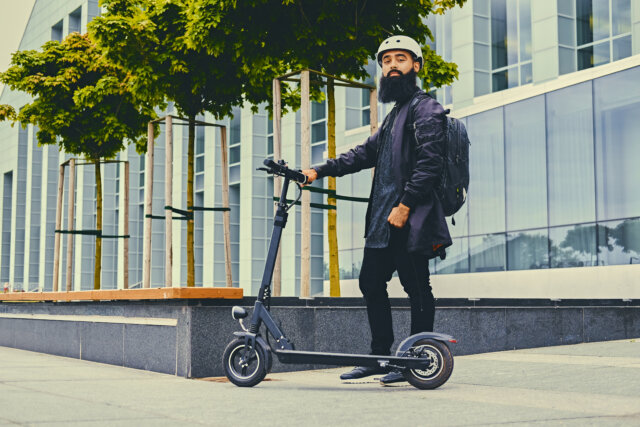
Wear a helmet every single time.
No exceptions. Not for a “quick ride to the corner.” Wearing a helmet properly can lower the risk of head and brain injuries and severe brain injuries by 63–88%. The 2025 Queensland pediatric study revealed that 42% of injured young riders were not wearing a helmet. For riders on a higher-speed scooter (more than 20 mph), a full-face helmet is recommended.
Ditch the alcohol before you ride.
Almost a third of the injured e scooter riders were drunk. Three things you need on two small wheels are balance, reaction time and judgment, and all of these are compromised by alcohol. If you’re inebriated, use a rideshare. It is less expensive than an ambulance.
Be visible, especially at night.
Low visibility is a top risk factor. The survey for the RSA 2025 revealed that just 19% of e‑scooter users wore high‑visibility clothing. Wear reflective clothing or a bright vest. Use the headlight and taillight of your scooter. For more in-depth information on nighttime safety, read our comprehensive article: Urban Commuting on E‑Scooters After Dark: The Importance of LED Lights for Safety in Cities.
Know your battery.
Purchase from trusted vendors, not from random online marketplaces. Check for certifications such as UL 2272 (entire electrical drive train system for personal e-mobility devices) or UL 2849 (electrical system of e bikes, batteries and chargers).
Ride predictably, not aggressively.
Follow traffic laws. Use hand signals. Don’t weave between cars. Keep in mind that drivers don’t see you as easily as they see a bicycle, so assume that they haven’t seen you. Wrist, elbow, and knee guards are also recommended, and riding with headphones or cellphones is not recommended.
What Is the Safest E Scooter? A Quick Buyer’s Checklist
No scooter can be 100% accident-proof, but some are designed with more e scooter safety features than others. Here are the features you should consider when buying the safest e scooter:
- UL‑certified battery (UL 2272 or UL 2849)
- Dual braking system (disc brake and regenerative or drum brake)
- Pneumatic (air‑filled) tires for better grip and shock absorption
- Integrated lights (front, rear, and side reflectors)
- Turn signals (higher-end models, such as the Segway Ninebot ZT3 Pro, have them)
- Wide, non‑slip deck for stable footing
Many of the top Segway models include these features, but always verify the specs. Don’t assume that a higher price automatically means higher safety—check the certifications yourself.
E Bike Safety Tips: Cross‑Training for Two Wheels
A lot of the principles for e scooter safety apply to e‑bikes too. Indeed, some E bike safety tips fit right into place: wear a helmet, don’t drink, and be visible. The big difference is that e‑bikes are heavier (typically 50–70 lbs) and take longer to stop.
Alternate between the two, and keep in mind e bike safety tips, which include being more cautious when cornering and riding at a slower speed on shared paths. And just like scooters, e‑bike batteries pose the same fire risks. The same UL certifications and charging practices are used.
Wrapping It Up: You Control Your Safety
Here’s the bottom line. The safety of electric scooters isn’t determined by the scooter alone; it’s determined by you. The data shows that most injuries happen because riders skip helmets, ride drunk, or buy cheap, uncertified batteries. Those are all things you can control.
Yes, e scooters have real risks. But when you ride sober, geared up, and aware of your surroundings, those risks drop dramatically. The e scooter safety tips in this guide aren’t optional; they’re your ticket to thousands of happy, injury‑free miles.
So go ahead, enjoy the ride. Just do it with your eyes open, your helmet fastened, and your battery properly certified.